Speech Delay in Toddlers: When to Worry (and When Not To)
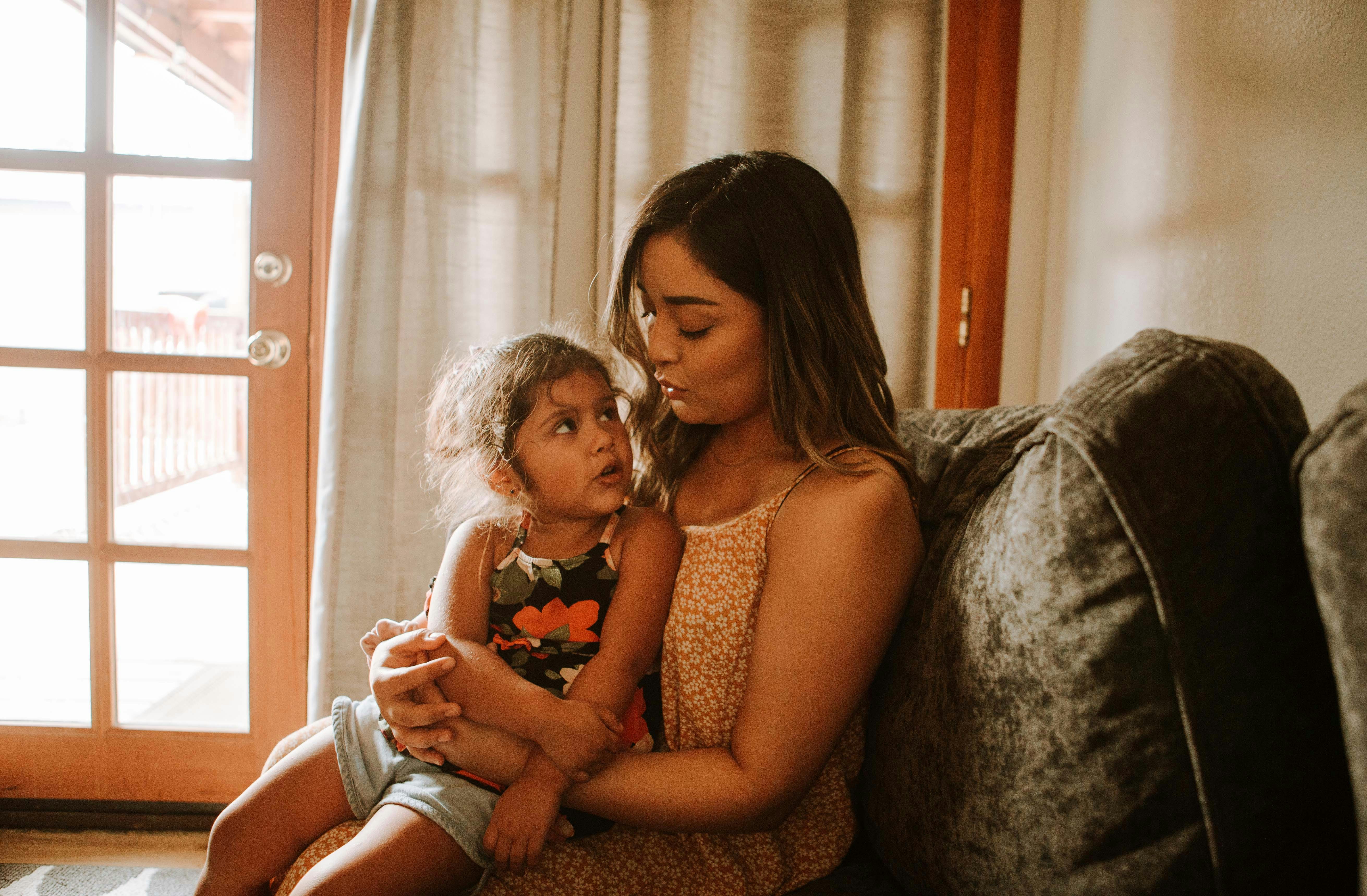
Your little one is nearly two, and while other toddlers at playgroup are stringing words together, yours has only a handful. Someone says "boys talk late." Someone else says "get it checked." And now you are awake at 11pm typing "when should I worry about speech delay" into your phone.
I see this every week in clinic, so let me start with the most important thing: noticing early and asking the question is not overreacting. It is one of the most useful things a parent can do. Most children who are slow to talk are simply late talkers who catch up. But a worry is worth checking, not carrying. This guide will help you tell the difference, calmly. And about that "boys talk late" line: boys can be a little later on average, but that is never a reason to wait out a real concern.
I am Dr Nisa Khalil, a paediatrician with a special interest in child development. Here is how I think about a toddler who is slow to talk.
First, the honest, reassuring truth
Being a late talker is common. Around 15 to 20% of toddlers are slower than their peers to start talking, and most of them, roughly 70 to 80%, catch up on their own by age 3 or 4 (sources: ASHA and the Hanen Centre).
Here is the part that matters, though, and it is why "wait and see" is not quite enough on its own: nobody can reliably tell, early on, which children will catch up and which will not. Around 20 to 30% of late talkers go on to have ongoing language difficulties if they do not get support. And the children who need help do far better when it starts early. So the goal is not to panic, and not to simply wait either. It is to check, so you know which situation you are in.
Speech milestones by age: what is typical
Speech develops on a range, not a strict timetable, so treat these as a guide, not a deadline. As a rough map of what most children are doing (sources: ASHA communication milestones and CDC Learn the Signs, Act Early):
By 12 months: babbling that sounds like real speech, a first word or two, and plenty of gestures, waving, and reaching to be understood, with pointing coming soon after.
By 18 months: a growing set of single words (often somewhere around 10 to 20 and climbing), following simple instructions, and pointing to show you things.
By 2 years: starting to put two words together ("more milk", "mummy go"), and a vocabulary that is expanding quickly, often around 50 words or more. You may see 50 words given at 2 years in some guides and at 2.5 years in others. They measure different things. The CDC lists the age by which about 3 in 4 children get there, so its number comes later. Speech therapists (ASHA) use the earlier mark, fewer than 50 words or no two-word phrases at 2, as the point to get a check. I use the earlier one, because waiting is the part that costs time.
By 3 years: short sentences of three or more words, and speech that familiar adults can understand most of the time. Strangers usually understand most of what your child says by around 4.
If your child is a little behind one of these but connecting well in every other way, that is often just their own pace. It is the pattern below that earns a closer look.
When to worry: the red flags that matter
These are the signals where I would not simply wait. Ask for a check if your child:
Is not babbling by 12 months, or not using any single words by 16 months.
Is not putting two words together by 2 years.
Does not point or wave by 12 months, or does not respond to their name by 9 months.
Cannot follow a simple instruction by around 2 years.
Is very hard for you to understand at 2, or very hard for strangers to understand by 3.
Has lost words, babble, or social skills they previously had. This one matters most of all, at any age. Tell your doctor straight away.
A single item on its own is often nothing. But any of these is a reason to ask, not a reason to wait. And your own instinct counts, too: a parent's genuine concern is one of the most reliable signals we have.
Late talker, or a real delay?
This is the question underneath all the others, and the honest answer is that they can be hard to tell apart from the outside. A "late talker" is usually a toddler whose words are simply slow to come, while everything else, play, understanding, social connection, and using gestures, is developing normally. A language delay is when the understanding or use of language itself is behind.
The most useful thing to watch is not the number of words. It is whether your child is still communicating in every other way, pointing, showing, understanding you, and using gestures to make up for the missing words. A child who does all of that but is slow to talk is reassuring. A child whose quiet speech comes with less understanding, less pointing, or less back-and-forth needs a closer look. Telling a late talker apart from something more, including autism, deserves its own read: speech delay vs autism.
Not sure where your child sits? Take the 2-minute speech check
Answer a few quick questions about your child's age and communication, and you will get a simple, calm read on whether things look on track or worth discussing with a doctor. It is not a diagnosis, just a way to turn a vague worry into a clear next step.
Take the 2-minute speech check
What a developmental check looks at
If a check is the right next step, here is what it involves, and why it is not something to dread. It is a calm, unhurried look at how your child communicates and develops overall. I take a careful history, watch how your child plays and interacts, make sure your child's hearing is checked (a child who cannot hear well often talks late, so I arrange a hearing check with an audiologist where one is needed), and look at development across the board, not just words. Where speech therapy is the right support, I refer you to a speech-language therapist. You leave understanding what is going on and exactly what happens next.
What you can do at home, starting today
Whatever the outcome, these help every child and never hurt:
Talk through your day out loud, narrate what you are both doing.
Read together every day, even a few minutes, and let your child turn the pages and point.
Follow their lead: name what they are looking at rather than quizzing them.
Cut background noise and screens during talking and play time, so your voice is the main event.
Get down to their level and give them time to respond, a few seconds of silence invites them to try.
These support a late talker and a child with a delay alike, so you lose nothing by starting now.
Looking further ahead, language is one of the foundations of being ready for school. I cover what that looks like in school readiness in Malaysia.
Where I fit in
To be clear about my role: I am a general paediatrician with a special interest in child development. What I do is the developmental check, make sense of what is going on, rule out things like hearing loss, and connect you with the right support, a speech-language therapist, and audiology, when it is needed. The check is the calm first step, and no referral is needed to book.
Turn the worry into a plan. If your gut says something, that is reason enough. A developmental consultation is an unhurried look at how your child is communicating, with clear next steps whatever we find.
Frequently asked questions
At what age should I worry that my toddler is not talking?
The clearest red flags are no single words by 16 months and no two-word phrases by 2 years, along with any loss of words or skills your child previously had. Speech develops on a range, so a child slightly behind who still points, understands, and connects is often just their own pace. But any of those red flags, or a genuine parental concern at any age, is worth a check rather than a wait.
Is my 2-year-old's speech delayed?
By age 2, many children are putting two words together. Fewer than 50 words, or no word combinations, at 2 is the point to get a check (ASHA), even though the CDC places 50 words a little later, at 2.5 years. If it comes with trouble understanding you or few gestures, check sooner. Many two-year-olds who are slow to talk are late talkers who catch up, but because you cannot tell in advance which will, a check is the safe move.
Will my late talker catch up on their own?
Many do. Around 70 to 80% of late talkers catch up by age 3 or 4. But around 20 to 30% do not without support, and nobody can reliably predict early which group a child is in. That is why an early check matters: it tells you which situation you are in without losing time, and early support helps the children who need it most.
When should I see a doctor about my child's speech?
Any time you have a genuine concern. Sooner rather than later if your child hits one of the red flags: no words by 16 months, no two-word phrases by 2 years, hard to understand at 2, or any loss of skills. You do not need a referral to book a developmental consultation, and a check either reassures you or gets support started early.
What is the difference between a speech delay and autism?
A speech delay is about words being slow to come, while the child still connects, points, shares, and understands. Autism involves differences in that social communication itself, less pointing and sharing, alongside any speech delay. They can overlap and be hard to tell apart from home, which is why a check is worth it. I have written a fuller guide: speech delay vs autism.
Does speaking two languages cause speech delay?
No. Learning two languages does not cause or worsen a speech delay. Bilingual children reach their speech milestones on a similar timeline to other children, and it is normal for them to mix languages early on. The key is to count your child's words across all their languages together, not just one. If that combined vocabulary is behind for their age, it is worth a check, the same as for any child.
How much screen time is okay for a toddler who is learning to talk?
General guidelines (WHO and the American Academy of Pediatrics) suggest keeping screens away from babies and very young toddlers, apart from video calls with family, and only introducing any screen time gradually from around 18 months, and for ages 2 to 5, keeping it limited, ideally under an hour a day of good-quality content watched together. Heavy screen use is linked with less talking, mostly because time on a screen replaces the live back-and-forth conversation that actually builds language. That is an association, not proof that screens by themselves cause a speech delay. The practical takeaway is to protect real talking, reading, and play time first, and if you are worried about your child's speech, cut back on screens and get a check rather than waiting.
Will speech therapy help my toddler?
For most children with a speech or language delay, yes. Early speech and language therapy is well supported by evidence, and a big part of it is coaching parents on simple everyday strategies to use at home, which is where a lot of the progress happens. The earlier support starts, the more it tends to help, which is exactly why an early check matters rather than simply waiting to see.
Where can I get my child's speech checked in Malaysia?
You can see a paediatrician at a private hospital directly, or raise your concern at your child's routine visit at a Klinik Kesihatan. Speech-language therapy is available through some government hospitals and private centres. Because government waiting lists can be long, it helps to start early. A developmental check with a paediatrician is a good first step, and you do not need a referral to book one.
Worried about your child?
Book an appointment with Dr Nisa Khalil for calm, evidence-based paediatric care when your child is unwell.
Book an appointment