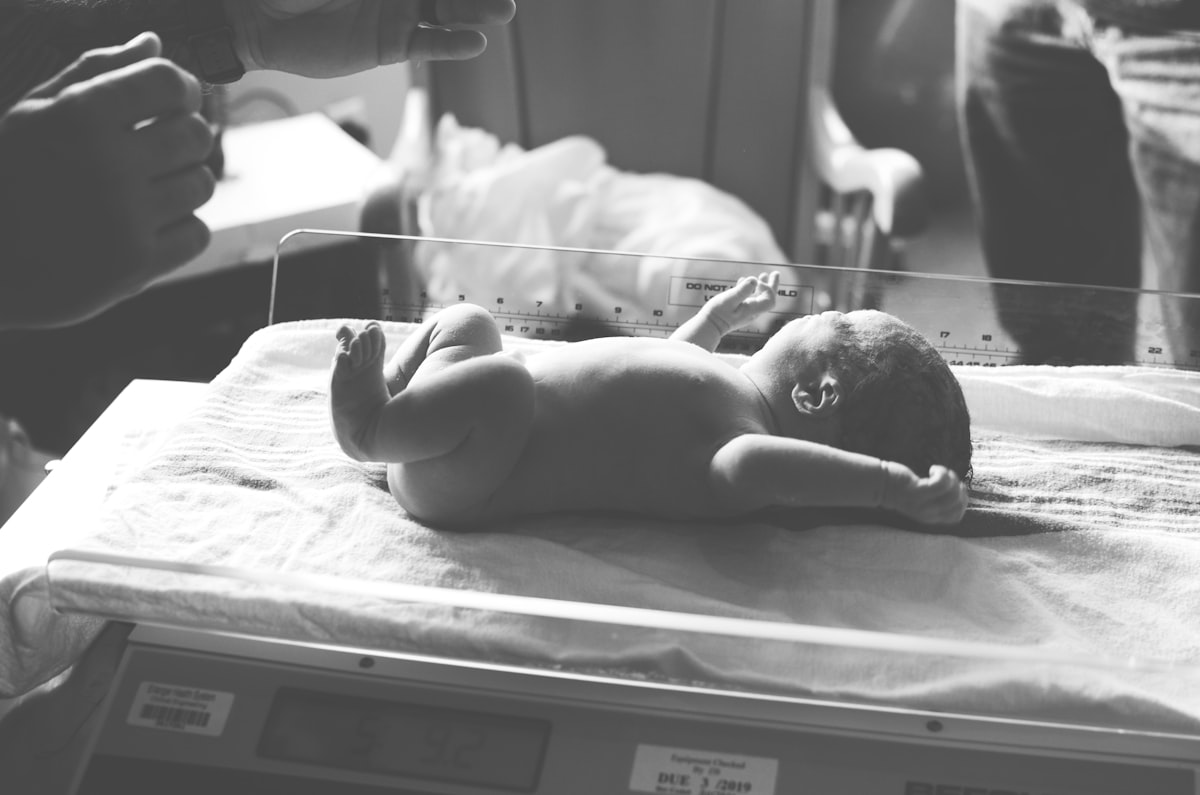
Is My Baby Growing Normally? A Guide to Weight and Height Milestones in Malaysia

Medically reviewed by Dr Nisa Khalil, MBBS, MPaeds. Consultant Paediatrician, ParkCity Medical Centre, Kuala Lumpur. Last reviewed July 2026.

"Is my baby gaining enough weight?" is one of the most common questions parents ask me. It is also one of the most anxiety-inducing. Growth varies between babies, but there are clear patterns that help us know when a baby is thriving and when they need extra support.

I am Dr Nisa Khalil, a consultant paediatrician at ParkCity Medical Centre in Kuala Lumpur, and weight is the thing parents ask me about most in the first year. I plot growth on the same WHO charts your klinik kesihatan uses. What follows is what those charts actually mean, the specific numbers that make me want to see a baby sooner, and how often a baby genuinely needs to be weighed, which is far less often than most worried parents think.

What Does Normal Baby Growth Look Like?

Babies grow very rapidly in the first year of life. Here is what to generally expect, based on the WHO Child Growth Standards used in Malaysia's health clinics (klinik kesihatan):

  • Birth to 6 months: babies typically gain about 150 to 200g per week

  • 6 to 12 months: growth slows to about 100g per week

  • By 4 to 5 months: most babies double their birth weight

  • Height, or length, also increases rapidly. Typically around 25cm in the first year

These are averages. Your child's growth trajectory matters more than any single measurement.

Is My Baby's Weight Gain Normal for Their Age?

Here is the honest answer, and it is not the one most parents are hoping for: no single weekly number decides this. What decides it is the shape of the line on the chart.

Age

Typical weekly gain, on average

What actually matters most

First few days

A small loss, not a gain. It usually stops by day 3 or 4

Losing more than 10 in 100 of birth weight needs a proper look

Birth to 6 months

Around 150 to 200g a week

Whether the line is tracking, not any single week

6 to 12 months

Slows to around 100g a week

The slowing is expected. It is not a problem

After 12 months

Slower again, and appetite drops too

Tracking along their own curve

The averages above are worth knowing, but read them as averages and nothing more. A baby who gains 130g one week and 210g the next has done nothing wrong. A baby tracking steadily along the 9th centile is growing normally. A baby who was on the 75th and is now on the 25th has my full attention, even though they are the bigger baby of the two.

The numbers that actually make me want to see a baby

These come from the NICE guideline on faltering growth (NG75), which is the standard I work to. They are more specific than the "two percentile lines" rule you will find on most parenting sites, and the difference matters for small babies.

  • In the first days of life: losing more than 10 in 100 of their birth weight. That needs a clinical assessment, a proper feeding history, and usually someone trained watching a feed.

  • Getting back to birth weight: the early loss usually stops by day 3 or 4, and most babies are back to their birth weight by 3 weeks of age. If yours is not, that is worth a review rather than a wait.

  • On the chart. How far a baby needs to fall before it counts as faltering growth depends on where they started: a fall across 1 or more centile spaces if born below the 9th centile, 2 or more if born between the 9th and 91st, and 3 or more if born above the 91st.

  • At any birthweight: a current weight below the 2nd centile for their age.

A small baby who slips one centile space is a concern that the flat "two lines" rule would tell you to ignore. That is why I use the NICE version.

How often should you weigh your baby? Less than you are weighing them

Almost every anxious parent I meet is weighing too often, and frequent weighing manufactures anxiety rather than answering it. Babies do not gain smoothly, so the more often you weigh, the more meaningless dips you will see.

NICE gives an upper limit. Weigh no more often than:

  • daily, if your baby is under 1 month old

  • weekly, from 1 to 6 months

  • fortnightly, from 6 to 12 months

  • monthly, from 1 year

"Nampak kurus, timbang lagi lah." I hear that one a lot, usually from a very tired mother who has been weighing every second day. If the line on the chart is tracking, the scale is not the thing to watch. Feeding, wet nappies, alertness and the trend over weeks are.

If you want to see where your child currently sits on the WHO curve, I built a free growth checker that plots a single measurement for you. It is a reference aid, not a diagnosis, and it cannot see a trend the way a clinic visit can.

What Is the Growth Chart Used in Malaysia?

Malaysian health clinics use the WHO Child Growth Standards, the same charts printed in the Buku Rekod Kesihatan Bayi dan Kanak-Kanak issued by the Ministry of Health. They are based on data from children around the world raised in optimal conditions, so they describe how children should grow rather than how an average population happens to grow. The charts track:

  • Weight-for-age

  • Length or height-for-age

  • Weight-for-length

  • Head circumference

Results are plotted on percentile curves. There is no single correct percentile. A baby consistently tracking at the 10th percentile is growing normally, just smaller. What concerns me is a baby crossing downwards through centile spaces over time, by the amounts set out above.

When Should You Be Concerned About Weight Gain?

Speak to your paediatrician if your baby:

  • Has not regained their birth weight by 3 weeks of age. Most newborns lose some weight in the first few days, that loss usually stops by day 3 or 4, and a loss of more than 10 in 100 of birth weight needs assessing at the time rather than watching

  • Is losing weight after the newborn period

  • Is not gaining weight consistently over 4 to 6 weeks

  • Falls across centile spaces on the growth chart, by the amounts set out above. How many spaces counts depends on the centile they were born on

  • Seems unusually tired or disinterested in feeding

  • Has fewer than 6 wet nappies per day, for breastfed newborns

Why Might a Baby Not Be Gaining Weight?

The causes range from feeding issues to medical conditions:

  • Feeding difficulties: latch problems, low milk supply, or poor feeding technique

  • Insufficient milk intake, whether breast or formula

  • Reflux or vomiting, if baby is bringing back significant amounts

  • Underlying illness: infection, heart conditions, metabolic disorders

  • Food protein allergy or intolerance

  • Prematurity

I will take a thorough feeding history, examine your baby, and determine whether investigations or specialist referrals are needed. Most of what I find in that list is a feeding problem rather than a disease, which is why the consultation usually starts with a feeding history rather than a blood test. If that is where your worry sits, this is what a feeding and growth consultation actually covers.

How Is Weight and Growth Monitored in Malaysia?

Routine child health checks (pemeriksaan kesihatan kanak-kanak) are carried out at your nearest klinik kesihatan through the first years of life, and weight, length and head circumference are measured and plotted at each visit. The schedule is printed in the buku rekod, so bring it to every appointment.

If you miss any of these visits, you can still bring your child in at any time for a growth check. Private paediatricians also monitor growth at every consultation.

Growing Well but Not Talking Yet? When to Worry About a Toddler Not Talking

Parents often notice this in the same room where the weighing happens, because in Malaysia it is the same visit. The check at your klinik kesihatan looks at growth and development together, which is why "she is a good size" and "she is not saying much" so often land in the same conversation.

Growth and speech are separate tracks. A chunky, thriving toddler can have a language delay, and a small one can be chatty. Weight tells you nothing about talking.

The CDC and AAP milestone checklists are useful here because of how they are built: each milestone is one that at least 75 in 100 children can do by that age. So missing one is not a diagnosis, but it is a reason to ask rather than to wait.

  • By 12 months: calls a parent "mama", "dada" or another special name, waves bye-bye, understands "no"

  • By 18 months: tries to say at least 3 words besides mama or dada, and follows a one-step instruction without you gesturing

  • By 24 months: puts at least 2 words together, like "more milk", and points to things in a book when you ask

  • By 30 months: says around 50 words, and uses two words with an action word in them, like "doggie run"

The ones that should not wait

  • No babbling and no gestures such as pointing, showing or waving by 12 months

  • No single words by 16 months

  • No two-word phrases of their own, not copied or repeated, by 24 months

  • Losing words, babbling or social skills they already had, at any age. This is the one that never waits. Around a quarter of children later diagnosed with autism are reported to lose language or social skills, most often between 18 and 24 months, and losing skills always warrants a medical look

"Nanti pandai lah, boys memang lambat cakap." I hear this in clinic most weeks, usually from someone who loves the child very much and is trying to be kind. Some late talkers do catch up on their own. The problem is that there is no reliable way to tell in advance which ones will, and the waiting is the only part you cannot get back. Standardised developmental screening is recommended at 18 and 24 months for exactly this reason.

If the talking is what is worrying you rather than the weight, I have written about it properly: signs of speech delay in toddlers, and when to see a doctor.

Tips for Supporting Healthy Growth

  • For breastfed babies: feed on demand, at least 8 to 12 times in 24 hours for newborns

  • For formula-fed babies: ensure correct preparation and volumes per age

  • Introduce solid foods at around 6 months, not before 4 months

  • Avoid giving water, juices, or other liquids to young infants, as these can reduce milk intake

  • Watch for hunger and satiety cues rather than forcing volumes

When to See a Paediatrician

If your baby seems to be growing well and is active, alert, and meeting developmental milestones, they are very likely doing fine, even if they are on the smaller side. But if you are worried, it is always worth getting a proper growth assessment. I can give you clarity, and catch any issues early if there are any.

If you are looking at the chart and you cannot tell whether the line is fine or falling, that is exactly the appointment to make. Bring the buku rekod, and we will look at the trend together rather than at one number. Book at drnisakhalil.com/appointment, or come and see me at ParkCity Medical Centre.

Questions Parents Ask

Is my baby's weight gain normal for their age?

Weekly averages are roughly 150 to 200g from birth to 6 months and around 100g from 6 to 12 months, but no single week decides anything. What a paediatrician judges is the trend on the WHO chart. A baby tracking steadily along the 9th centile is growing normally. A baby who has fallen from the 75th to the 25th needs looking at, even though they are still the heavier baby. Bring the buku rekod so the whole line can be seen at once.

How much weight loss is normal in the first week?

Some loss is expected and it usually stops by day 3 or 4. A loss of more than 10 in 100 of birth weight is the point at which NICE advises a clinical assessment, including a detailed feeding history and someone trained watching a feed. Most babies are back to their birth weight by 3 weeks of age. If yours is not, ask for a review rather than waiting it out.

How often should I weigh my baby?

Less often than most worried parents do. NICE advises weighing no more often than daily under 1 month, weekly from 1 to 6 months, fortnightly from 6 to 12 months, and monthly from 1 year. Babies do not gain smoothly, so weighing more often mostly produces meaningless dips and more anxiety. If you find yourself on the scale every second day, that itself is worth mentioning at your next visit.

My baby is on the 10th percentile. Is that too small?

Not on its own. Ten in 100 healthy children sit at or below the 10th centile, because that is what a centile means. A baby who has tracked along the 10th since birth is growing normally and is simply on the smaller side. What concerns me is a baby who has crossed downwards through centile spaces, or whose current weight is below the 2nd centile for their age.

What is faltering growth?

It is the term used when a child's weight gain is slower than expected for them specifically, shown by their line crossing downwards on the chart. How far a fall has to go before it counts depends on birthweight: 1 centile space if born below the 9th centile, 2 if born between the 9th and 91st, 3 if born above the 91st. It is a description of a pattern, not a diagnosis, and the cause is usually a feeding problem rather than a disease.

When should I worry about my toddler not talking?

Ask sooner rather than later if there is no babbling and no pointing or waving by 12 months, no single words by 16 months, or no two-word phrases of their own by 24 months. Losing words or social skills a child already had, at any age, should be assessed promptly and never watched. Screening at 18 and 24 months is recommended precisely because waiting to see is the only part of this you cannot get back later.

Can a baby be growing well and still have a speech delay?

Yes, and this catches parents out often. Growth and language run on separate tracks. A child on the 90th centile for weight can have a significant language delay, and a small child can be talking in sentences. A good weight is genuinely reassuring about feeding and general health. It tells you nothing at all about how their speech is coming along, which is checked separately at the same visits.

Which growth chart is used in Malaysia?

The WHO Child Growth Standards, which are the charts printed in the Buku Rekod Kesihatan Bayi dan Kanak-Kanak issued by the Ministry of Health. They track weight-for-age, length or height-for-age, weight-for-length and head circumference. They are built from children raised in optimal conditions, so they describe how children should grow rather than how an average population happens to grow.

Where can I get my child's growth checked in Malaysia?

Your nearest klinik kesihatan measures and plots weight, length and head circumference at the routine child health visits, free of charge, and you can bring your child in between visits if you are worried. Private paediatricians plot growth at every consultation. I see babies and children for growth and feeding concerns at ParkCity Medical Centre in Kuala Lumpur.

Sources

Where a figure or a threshold is quoted above, this is where it comes from.

  • The weight-loss threshold in the early days, the return to birth weight by 3 weeks, the birthweight-dependent centile-space thresholds for faltering growth, and the maximum weighing frequency by age: National Institute for Health and Care Excellence. Faltering growth: recognition and management of faltering growth in children (NG75). Published 27 September 2017. nice.org.uk/guidance/ng75

  • The growth charts themselves, and the weight velocity data behind the weekly averages: World Health Organization Child Growth Standards. who.int/tools/child-growth-standards

  • The Malaysian child health record book and the charts printed in it: Kementerian Kesihatan Malaysia, Buku Rekod Kesihatan Bayi dan Kanak-Kanak (0-6 Tahun). hq.moh.gov.my/bpkk

  • The speech and language milestones, and the "at least 75 in 100 children" basis for them: Zubler JM, Wiggins LD, Macias MM, et al. Evidence-Informed Milestones for Developmental Surveillance Tools. Pediatrics. 2022;149(3):e2021052138. These are the milestones used in the CDC's revised developmental checklists. publications.aap.org

  • Screening at 18 and 24 months, and loss of previously acquired language or social skills: Hyman SL, Levy SE, Myers SM, AAP Council on Children with Disabilities. Identification, Evaluation, and Management of Children With Autism Spectrum Disorder. Pediatrics. 2020;145(1):e20193447. publications.aap.org

Last reviewed July 2026.

About the Author

Dr Nisa Khalil, MBBS, MPaeds, is a consultant paediatrician with a special interest in child development, practising at ParkCity Medical Centre, Kuala Lumpur. She sees babies and children for growth, feeding, development and general paediatric care. MMC No 49282. NSR No 139571.

This article is general education and is not a substitute for a consultation about your own child. If you are worried, please have your child seen.

Book via WhatsApp